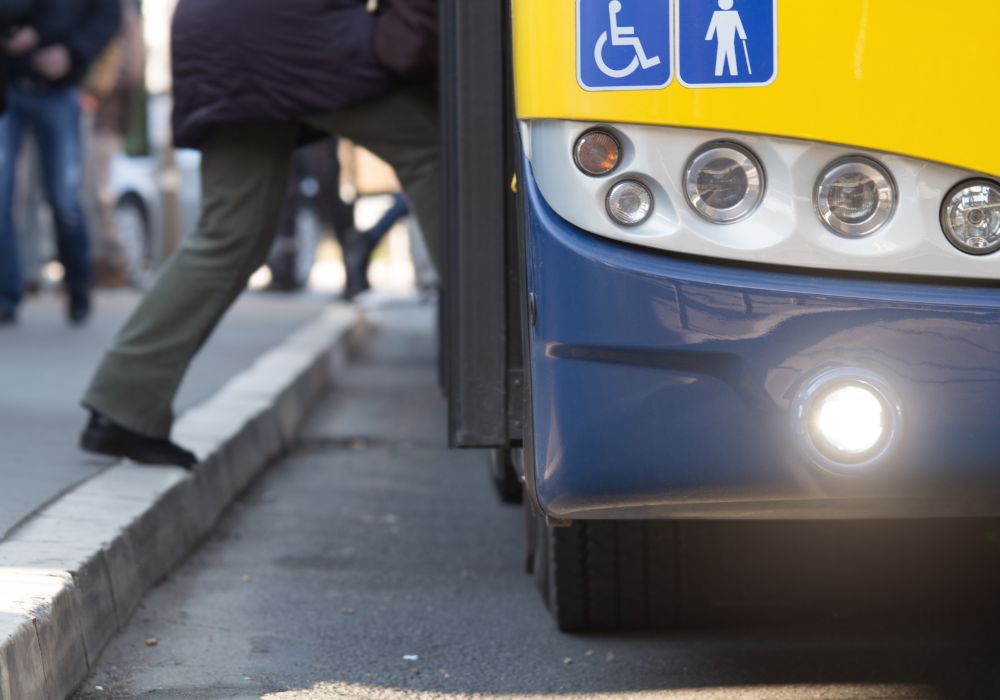

Public transportation is the cheapest way to reach a medical appointment and works well for riders who can walk to the stop, wait, and handle the trip alone. Non-emergency medical transportation (NEMT) costs more but picks the rider up at home, helps them from the door, and delivers them inside the building, which is what matters for wheelchair users, people recovering from a procedure, and anyone who can’t safely manage a bus or train. Most families end up using both, depending on the appointment.
Here’s an honest comparison, with specifics for the Washington area, so you can decide which fits each trip.
Public transportation vs NEMT at a glance
- Cost: Transit fares are low, and reduced fares are available for seniors and riders with disabilities. NEMT is priced per trip; with H&M Transport a 10-mile wheelchair or ambulatory round trip is $140 at private-pay rates.
- Door-to-door help: Buses and trains stop at fixed points. NEMT drivers come to the door and walk the rider into the destination.
- Wheelchair access: Most buses and rail systems are built to carry wheelchairs, but the rider still has to reach the stop, board and ride without help. NEMT secures the wheelchair and assists the rider throughout.
- Timing: Transit runs on its own schedule, with transfers. NEMT is scheduled around the appointment.
- Riders who can’t sit up: Transit isn’t an option. NEMT offers stretcher transport.
- After sedation: Transit is not appropriate. NEMT can deliver the rider inside their home.
When public transportation works well for medical appointments
Public transit is a good choice when the rider:
- Walks without much difficulty, or manages a wheelchair independently.
- Has an appointment near a rail station or on a direct bus line.
- Isn’t having a procedure that affects alertness, balance or vision.
- Has a flexible schedule that can absorb a delay.
- Feels confident with the route and transfers.
The Washington area has a dense network: Metrorail and Metrobus, plus local systems such as Fairfax Connector, ART in Arlington, DASH in Alexandria, OmniRide in Prince William County, Ride On in Montgomery County and TheBus in Prince George’s County. Many hospitals and large medical office buildings sit on bus routes, and some are a short walk from a Metro station. For a routine checkup with a steady rider, transit can be the simplest option.
Where public transit falls short for patients
The gaps show up in the parts of the trip transit doesn’t cover:
- The first and last stretch. Getting from the front door to the bus stop, and from the stop into the clinic, is often the hardest part for someone with a walker, low vision or shortness of breath.
- Waiting and standing. Outdoor stops in summer heat or winter cold, and standing on a crowded bus, are hard for many patients.
- Transfers and delays. A missed connection can mean a missed appointment, and some offices will reschedule a patient who arrives late.
- Equipment problems. A broken station elevator or a crowded bus can leave a wheelchair user stranded.
- How you feel afterward. After chemotherapy, dialysis, an eye exam with dilation, or any procedure with sedation, riding transit home alone is not safe or not allowed. Our chemotherapy transportation page describes how those return trips work.
Under the ADA, public transit systems must provide people with disabilities an equal opportunity to benefit from their services. That law makes buses and trains accessible, but it doesn’t put someone at your side to help you through the trip.
Does a bus company accommodate medical transportation?
This question comes up often, and the answer is: partly. Fixed-route buses carry passengers with disabilities, and most can deploy a ramp or lift and secure a wheelchair. But a bus operator stays with the vehicle and follows a timetable. They won’t come to your door, help you down the front steps, or walk you into a doctor’s office.
Public transit agencies also run ADA paratransit for riders whose disability prevents them from using fixed-route service. In the Metro area that’s MetroAccess. Paratransit requires an application and eligibility determination, trips are usually shared with other riders, and pickups come within a window rather than at a set time. It is a real option for many riders with disabilities, and worth applying for if you qualify. It isn’t designed for stretcher patients, riders going home after sedation, or same-day hospital discharges.
Charter and tour bus companies generally don’t provide medical transportation at all.
When NEMT is the better choice
NEMT makes sense when any of these apply:
- The rider needs help from the door. Ambulatory transport is door-through-door: the driver meets the rider inside, assists them to the vehicle, and walks them into the appointment.
- The rider uses a wheelchair and can’t travel alone. Wheelchair transport keeps the rider in the chair, with a ramp or hydraulic lift and four-point securement. We can bring a chair at no extra cost.
- The rider has to lie down. Stretcher transport is bed to bed, always with at least two crew.
- The appointment involves sedation, dilation or an exhausting treatment.
- Timing is tight. Dialysis chairs, surgery check-ins and imaging slots don’t wait.
- The rider has memory loss and shouldn’t navigate stations or transfers.
- It’s a discharge. A patient leaving the hospital with new equipment or limited strength needs more than a bus.
Keep in mind that NEMT is not an ambulance. There’s no medical care or monitoring on board, and it never goes to an emergency room. For an emergency, call 911.
What each option costs
Transit is almost always cheaper per trip. NEMT costs more because a trained driver, a specialized vehicle and door-through-door help are dedicated to one rider.
H&M Transport’s private-pay rates are the same in Virginia, Maryland and DC:
- Wheelchair or ambulatory round trip: $55 per leg, five miles included per leg, $3.00 per mile after.
- One-way wheelchair or ambulatory trip: $90 plus $3.00 per mile, so a 10-mile trip is $120.
- Stretcher and bariatric trips, plus add-ons, are listed on our rates page.
Depending on coverage, the ride may not come out of pocket at all. For Virginia Medicaid: Call the transportation number on your Medicaid ID card; the brokers we work with are MTM Health and SafeRide Health. Request H&M Transport specifically when you book your ride. In DC, the only Medicaid plan we serve is UnitedHealthcare Community Plan of the District of Columbia, through SafeRide Health. H&M Transport is not a Medicaid provider in Maryland; in Montgomery County, Medicaid rides go through the county Department of Transportation’s Medical Assistance Transportation Program. Original Medicare doesn’t cover wheelchair vans, but some Medicare Advantage plans include rides.
Mixing transit and NEMT
Many families don’t pick one for good. A common approach:
- Use transit for routine visits when the rider feels well and the office is near a station or direct bus line.
- Book NEMT for procedures, treatments, early-morning appointments, bad weather days and anything involving sedation.
- Switch to NEMT permanently when a change in mobility makes transit unsafe.
Traffic is part of the picture too. If an appointment falls in rush hour, our post on medical transport during DC-area rush hour has planning tips. For riders in the District, see our page on non-emergency medical transportation in Washington, DC.
Common questions
Is NEMT more reliable than the bus?
NEMT is scheduled around your appointment and doesn’t involve transfers, so there are fewer points where the trip can go wrong. Traffic still affects any vehicle on the road, so allow a little extra time.
Can I take the bus home after a colonoscopy?
No. Facilities generally won’t release a sedated patient to travel alone. Arrange a ride with someone who can take you into your home.
Is MetroAccess the same as NEMT?
No. MetroAccess is public ADA paratransit with an eligibility process and shared rides. NEMT is a scheduled ride with trained crew, including options such as stretcher transport and help from inside the home.
Can a caregiver ride with me in an NEMT vehicle?
A family member or caregiver can usually ride along; tell us when you book.
How much notice does H&M Transport need?
Book 24 hours ahead to guarantee availability. Same-day rides need at least three hours’ notice.
Book a ride when the bus won’t do
When public transit isn’t safe or practical, book online or call (703) 304-7889. Choose ambulatory service if the rider walks with help, or wheelchair service if they need to stay seated in their chair.