
Transportation for Cardiac Rehabilitation

Cardiac rehab is typically three sessions a week for twelve weeks — thirty-six appointments after a heart attack, bypass, stent or valve surgery.

The evidence behind it is strong, yet many patients never finish the course, and the reason they give for dropping out is often not motivation. It is the ride. Patients are frequently told not to drive for weeks after a cardiac event, which is precisely the window in which rehab starts.

H&M Transport, the first NEMT provider in Virginia to earn NEMTAC accreditation, runs the program as a standing order. Call (703) 304-7889.
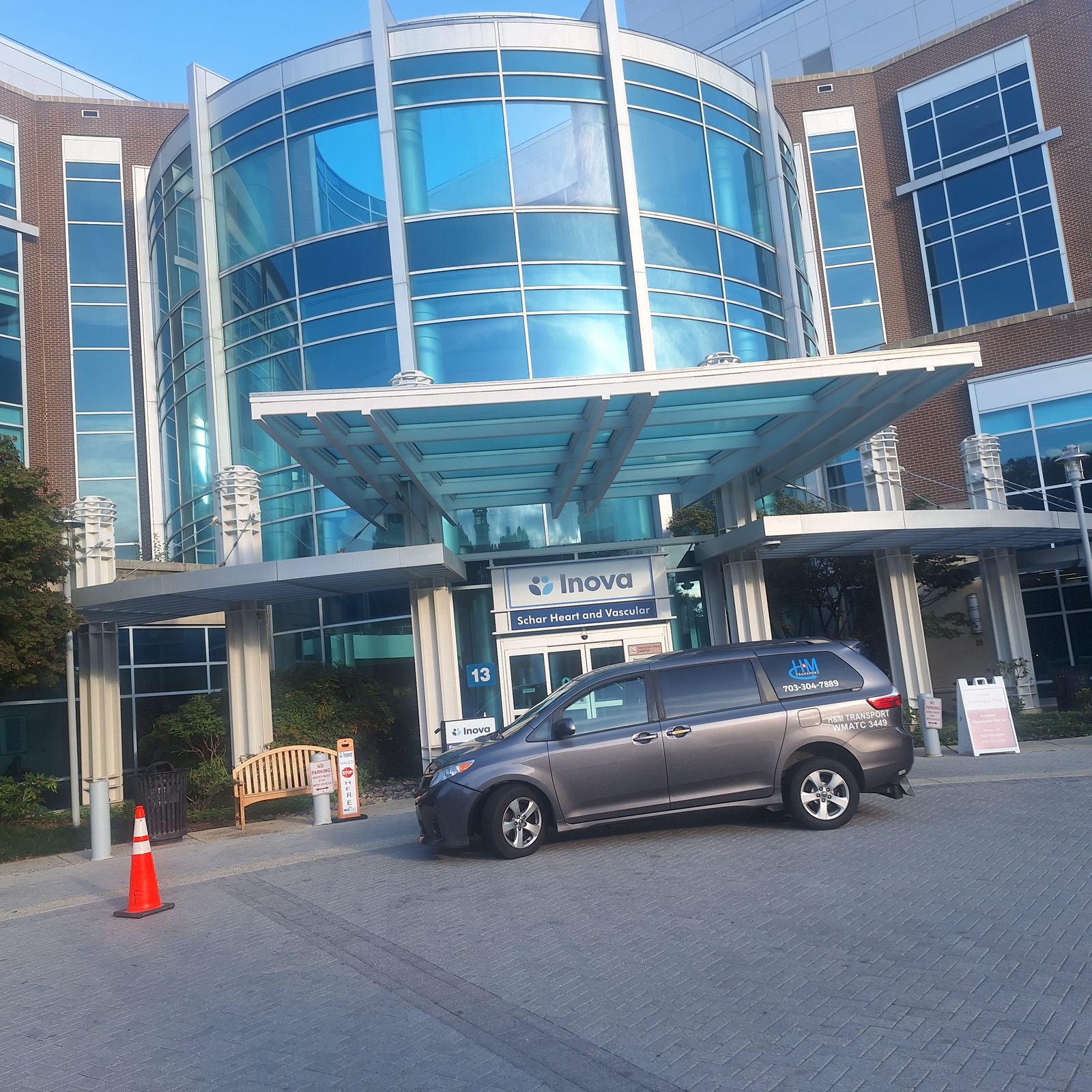
H&M Transport van at the Inova Heart and Vascular Institute in Fairfax, Virginia
At the Inova Heart and Vascular Institute.

The driving restriction is the whole problem

After a heart attack, patients are usually told not to drive for a period — often two to four weeks, longer after bypass surgery, and longer again if an ICD has been implanted. Virginia and Maryland both have restrictions tied to certain cardiac events and devices.

Cardiac rehabilitation typically starts inside that window. So the patient is being asked to attend three times a week, beginning at exactly the point they’ve been told not to drive, usually while a spouse is trying to return to work after weeks at the hospital.

Missing the start of the program matters. Attendance in the first two weeks is a strong predictor of finishing it, and finishing it is associated with substantially better outcomes. Here the ride is not a convenience.

How the ride works

Give us the program once and we hold every session. Tell us the days, the slot and the center, and all thirty-six visits go on a standing order. The same crews tend to cover the same riders, so the driver soon knows the entrance, the session length and how this rider likes to be helped in.

Sessions are usually an hour and the schedule is fixed. Same days, same time, twelve weeks. For an hour-long session, waiting is often the right call — $75 an hour for wheelchair or ambulatory — but we’ll advise based on your slot.

Tell us if there’s a sternotomy. After bypass surgery patients are under lifting and pushing restrictions and cannot use their arms to push up out of a seat. That changes how the crew assists at the door, and it is not obvious to a driver who hasn’t been told.

Tell us about an ICD or pacemaker. It doesn’t change the vehicle. It changes how the seatbelt sits, and a belt across a recent implant site is genuinely painful.

Book the whole twelve weeks. One call.

What it costs

Cardiac rehab rides by ambulatory or wheelchair transportation are $55 per leg on a round trip, with five miles included each way and $3 a mile after that. Over thirty-six sessions, that is the number to plan with. Stretcher round trips are $230 per leg.

The rate card and trip estimator are on our site, so you can price twelve weeks before you call. For Virginia Medicaid: Call the transportation number on your Medicaid ID card; the brokers we work with are MTM Health and SafeRide Health. Request H&M Transport specifically when you book your ride. In DC we serve UnitedHealthcare Community Plan of the District of Columbia members through SafeRide Health, and we are not a Maryland Medicaid provider. Original Medicare doesn’t pay for these vans, but a Medicare Advantage plan whose ride benefit runs through MTM Health or SafeRide Health can send the trip to us.

Cardiac trips that need an ambulance

We take rehab patients to scheduled sessions and back home; the van carries them, it doesn’t treat them.

A rider who needs an emergency room, monitoring on board or a transfer to another hospital for a higher level of care needs an ambulance, not our van; we give no medical care on board. If a rider becomes unwell, the driver stops safely and calls 911.

If this is a medical emergency, call 911.

If you can’t tell which kind of trip it is, call and describe the rider; when it needs an ambulance, we’ll say so.

Common questions

What if a rehab session runs over or I don’t know when I’ll finish?

Make the ride home a will-call. Call dispatch as the session ends and a driver is on the way; call after you’re finished and a driver arrives within 45 minutes. Calling early shortens the wait. Waiting on site is $75 an hour for wheelchair or ambulatory trips and $100 for stretcher.

How do I ask for H&M Transport through Virginia Medicaid?

Call the transportation number on your Medicaid ID card; the brokers we work with are MTM Health and SafeRide Health. Request H&M Transport specifically when you book your ride. Covered rides to cardiac rehab cost the member nothing.

Can the crew help a cardiac patient with steps at home?

Yes. A rider who can manage the steps with the driver’s arm pays nothing extra; one who can’t gets a stair chair team for $75 each way. After a sternotomy, tell us about the steps when you book.

Book the ride

If the program has given you a schedule, read it to us once and we’ll hold the whole course.

Phone dispatch at (703) 304-7889, day or night, or use our reservations page and we’ll ring back. We need three hours’ notice for a same-day trip, a booking the day before is guaranteed, and confirmation comes by call or text within two hours. Change or cancel more than two hours before pickup at no cost; later, or a no-show, is $50.

Our vans cover Northern Virginia, the District and Montgomery and Prince George’s counties: WMATC authority 3449 for DC and Maryland, and Virginia DMV Certificate #524 for Virginia trips.

Ready to book a ride?

Request a trip online, or call (703) 304-7889. We dispatch 24 hours a day, seven days a week, holidays included.

BOOK TRANSPORT