Transportation for Radiation Therapy

Radiation is the highest trip-count treatment we run after dialysis. A standard course is five days a week for four to seven weeks — twenty-five to thirty-five appointments, each one short, each one at the same time of day, each one non-negotiable.

That pattern is hard on families. It’s not the single ride that’s the problem; it’s the thirtieth one, on a Tuesday, when whoever has been driving has run out of leave.

H&M Transport runs the course as a standing order. Call (703) 304-7889.
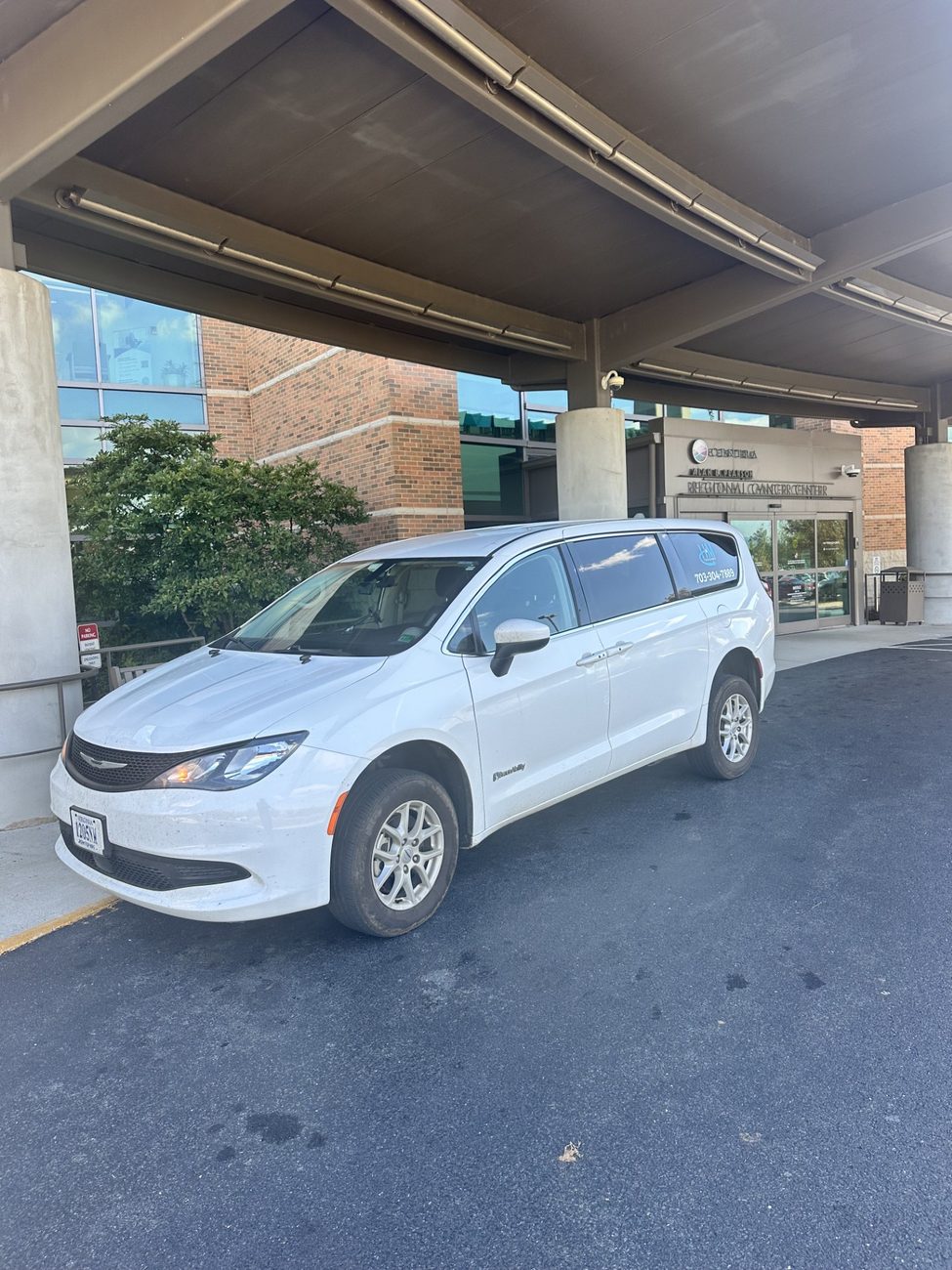
H&M Transport van at a regional cancer center for a scheduled treatment appointment
At a regional cancer center for a scheduled treatment.

What makes radiation different

The appointments are short and the schedule is rigid. Treatment itself is often fifteen minutes. But the linear accelerator is booked in tight slots, and a patient who misses their window doesn’t simply slide to the next one — they may lose the day, and gaps in a radiation course have clinical consequences.

Fatigue builds week on week. Radiation fatigue is cumulative and it does not track the dose. Patients are usually fine for the first week or two and considerably less fine by week four. A rider who walked to the vehicle in week one may need a wheelchair by week five.

Skin reactions make the seat matter. Depending on the treatment site, sitting can become genuinely uncomfortable partway through a course. Telling us lets the crew adjust the transfer and the positioning rather than improvise.

The timing is the same every day. Which makes this the single best fit for a standing order of anything we run.

How the ride works

Set up a standing order rather than rebooking every week. You tell us the days, the times and the destination once. The trip stays on our schedule, and the same crews tend to see the same riders — which matters more than it sounds like it should, because a driver who has done this run before knows which door, how long the appointment really takes, and whether this rider needs the vehicle warm before they get in.

Waiting usually beats a return leg. For a fifteen-minute treatment, having the vehicle wait — $75 an hour for wheelchair or ambulatory — is faster and often cheaper than scheduling two separate trips. We’ll advise once you tell us the slot time.

Book the level of service you’ll need in week five, not week one. Or tell us at the point it changes. Either is fine; discovering it at the door is not.

Tell us about the treatment site only so far as it affects the ride — whether sitting is painful, whether there’s a dressing, whether the rider needs help with the transfer.

What it costs

Ambulatory and wheelchair transportation round trips are $55 per leg with five miles included on each leg, plus $3 a mile beyond that. On a recurring schedule that’s the figure to plan around. Stretcher service is $230 per leg.

Our full rate card and trip estimator is published — you can work out the price before you call. Medicaid members should book through their plan’s transportation broker rather than through us; the number is on the back of the member’s ID card. Medicare generally does not cover non-emergency medical transportation.

What we can’t take

H&M Transport runs non-emergency medical transportation. We carry people to scheduled medical care and back home again, and the ride itself is transport rather than treatment.

That means there are trips we can’t take. We are not an ambulance service. We don’t provide medical care or monitoring on board, we don’t transport anyone to an emergency room, and we don’t move patients from one hospital to another for a higher level of care. Those are ambulance trips, and they need a crew and a vehicle equipped for them.

If this is a medical emergency, call 911.

If you’re not sure which you need, call us and describe the situation. We would rather tell you to dial 911 than send the wrong vehicle.

Common questions

What if the appointment runs long or I don’t know my return time?

Book the return as a will-call. If you can, call dispatch a little before your appointment wraps up, and we’ll start a driver your way so you wait as little as possible. If you can’t call until you’re finished, that’s fine: we’ll route the closest available driver, and our standard is to pick you up within 45 minutes of your call. The earlier you call, the shorter your wait. If you’d rather have the driver wait on site, prescheduled wait time is $75 an hour for wheelchair trips and $100 an hour for stretcher trips.

How do I ask for H&M Transport through Virginia Medicaid?

Call the transportation number on your Medicaid ID card; the brokers we work with are MTM Health and SafeRide Health. Request H&M Transport specifically when you book your ride. Covered rides to medical appointments cost the member nothing.

Can I use my HSA or FSA, or deduct medical transportation on my taxes?

Usually, yes. Under IRS rules, transportation that is mainly for and essential to medical care counts as a medical expense, and that is the same test HSA and FSA plans use. So a ride to a medical appointment can generally be paid from an HSA or FSA or counted toward an itemized medical deduction. We’ll send an itemized receipt for any trip on request. Your plan administrator makes the final call on reimbursement, and a tax advisor can confirm the deduction for your situation.

Book the ride

Give us the start date, the end date and the daily slot time in one call and the whole course goes on our board.

Call dispatch at (703) 304-7889, any hour, or start on our reservations page and we’ll call you back.

We serve Northern Virginia, Washington DC and the Maryland suburbs, and we hold WMATC authority 3449 for crossings into the District and Montgomery and Prince George’s counties.

Ready to book a ride?

Request a trip online, or call (703) 304-7889. We dispatch 24 hours a day, seven days a week, holidays included.

BOOK TRANSPORT