Transportation for Infusion Therapy

Infusion therapy has moved out of hospitals and into standalone centers over the last decade, and the transport problem moved with it.

Biologics for rheumatoid arthritis, Crohn’s or psoriasis. Iron infusions for chronic anemia. Immunoglobulin for immune deficiency. Antibiotic courses that used to mean an inpatient stay and now mean a chair three times a week. All of it recurring, most of it lasting months or indefinitely.

H&M Transport runs these as standing orders. Call (703) 304-7889.
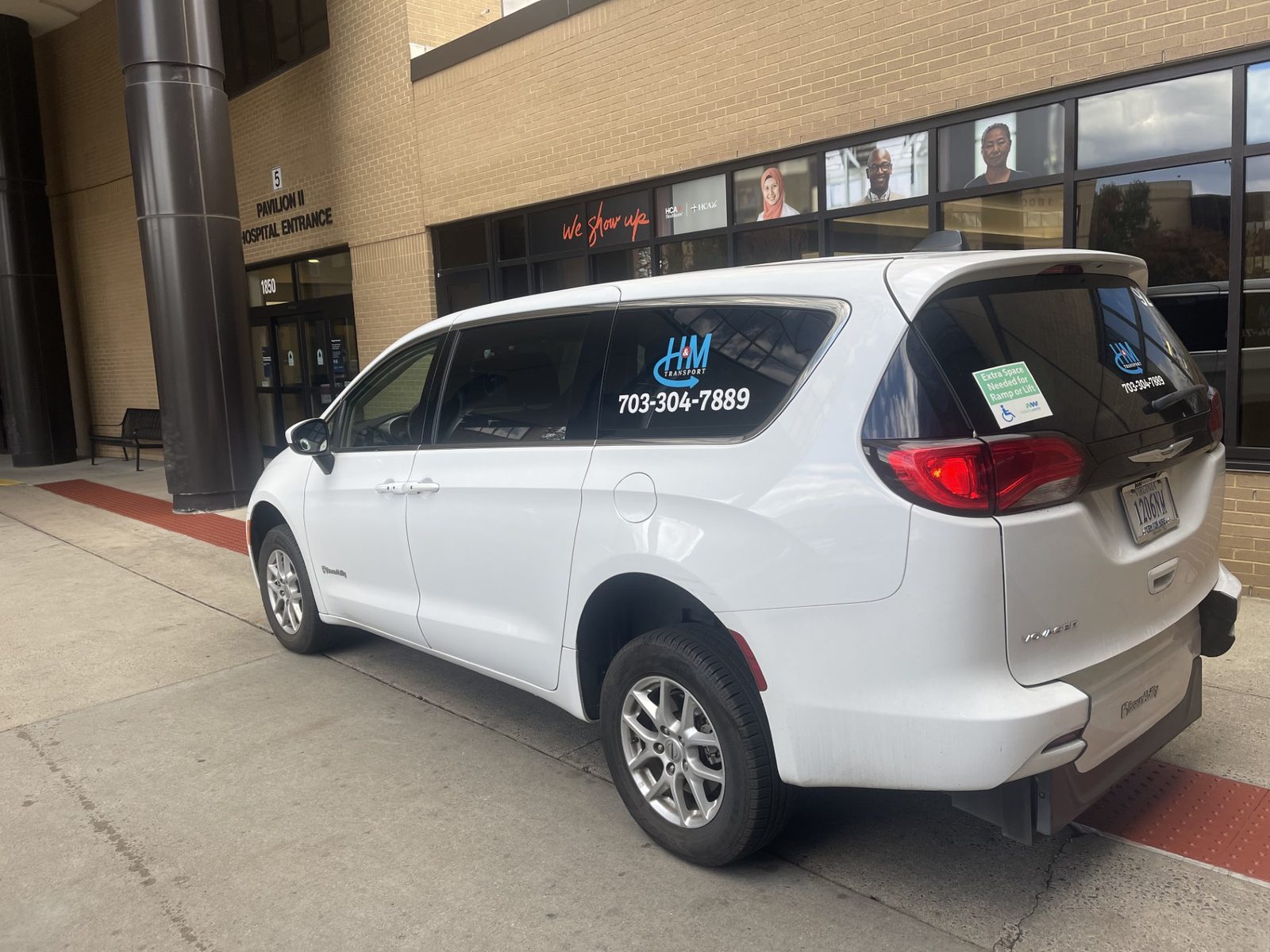
H&M Transport van at Reston Hospital Center in Reston, Virginia
Arriving for a scheduled infusion appointment.

Who rides with us

Patients on biologics — typically every four to eight weeks, indefinitely. Often people whose underlying condition is exactly why driving is difficult: rheumatoid arthritis in the hands, a flare that makes a car door hard to open.

Patients on iron infusions — usually a short series, but the anemia that prompted them means real fatigue and sometimes dizziness on standing.

Patients on immunoglobulin — long infusions, often several hours, with headache and fatigue common afterwards.

Patients on outpatient IV antibiotics — daily or several times weekly, frequently after a hospital discharge, often still recovering from whatever put them in the hospital.

The common thread is that these are people with an ongoing condition rather than a one-off event, which is why the arrangement that works is a standing one.

How the ride works

Set up a standing order rather than rebooking every week. You tell us the days, the times and the destination once. The trip stays on our schedule, and the same crews tend to see the same riders — which matters more than it sounds like it should, because a driver who has done this run before knows which door, how long the appointment really takes, and whether this rider needs the vehicle warm before they get in.

Infusion times vary enormously. Some are thirty minutes; immunoglobulin can be four hours or more. Tell us which and we’ll advise whether waiting or a return leg is the better call.

Reactions happen on the way home, not at the center. Most infusion reactions are caught in the chair, but headache, chills and fatigue frequently start afterwards. Our drivers are told to expect a rider who is less well leaving than arriving.

Tell us if there’s a port or a PICC line. Not because it changes the vehicle, but because it changes how the crew assists — you don’t take someone’s arm on the side with the line in it.

What it costs

Ambulatory and wheelchair transportation round trips are $55 per leg with five miles included on each leg, plus $3 a mile beyond that. On a recurring schedule that’s the figure to plan around. Stretcher service is $230 per leg.

Our full rate card and trip estimator is published — you can work out the price before you call. Medicaid members should book through their plan’s transportation broker rather than through us; the number is on the back of the member’s ID card. Medicare generally does not cover non-emergency medical transportation.

What we can’t take

H&M Transport runs non-emergency medical transportation. We carry people to scheduled medical care and back home again, and the ride itself is transport rather than treatment.

That means there are trips we can’t take. We are not an ambulance service. We don’t provide medical care or monitoring on board, we don’t transport anyone to an emergency room, and we don’t move patients from one hospital to another for a higher level of care. Those are ambulance trips, and they need a crew and a vehicle equipped for them.

If this is a medical emergency, call 911.

If you’re not sure which you need, call us and describe the situation. We would rather tell you to dial 911 than send the wrong vehicle.

Common questions

What if the appointment runs long or I don’t know my return time?

Book the return as a will-call. If you can, call dispatch a little before your appointment wraps up, and we’ll start a driver your way so you wait as little as possible. If you can’t call until you’re finished, that’s fine: we’ll route the closest available driver, and our standard is to pick you up within 45 minutes of your call. The earlier you call, the shorter your wait. If you’d rather have the driver wait on site, prescheduled wait time is $75 an hour for wheelchair trips and $100 an hour for stretcher trips.

How do I ask for H&M Transport through Virginia Medicaid?

Call the transportation number on your Medicaid ID card; the brokers we work with are MTM Health and SafeRide Health. Request H&M Transport specifically when you book your ride. Covered rides to medical appointments cost the member nothing.

Can I use my HSA or FSA, or deduct medical transportation on my taxes?

Usually, yes. Under IRS rules, transportation that is mainly for and essential to medical care counts as a medical expense, and that is the same test HSA and FSA plans use. So a ride to a medical appointment can generally be paid from an HSA or FSA or counted toward an itemized medical deduction. We’ll send an itemized receipt for any trip on request. Your plan administrator makes the final call on reimbursement, and a tax advisor can confirm the deduction for your situation.

Book the ride

If your infusion schedule is fixed, one call sets it up for the duration.

Call dispatch at (703) 304-7889, any hour, or start on our reservations page and we’ll call you back.

We serve Northern Virginia, Washington DC and the Maryland suburbs, and we hold WMATC authority 3449 for crossings into the District and Montgomery and Prince George’s counties.

Ready to book a ride?

Request a trip online, or call (703) 304-7889. We dispatch 24 hours a day, seven days a week, holidays included.

BOOK TRANSPORT