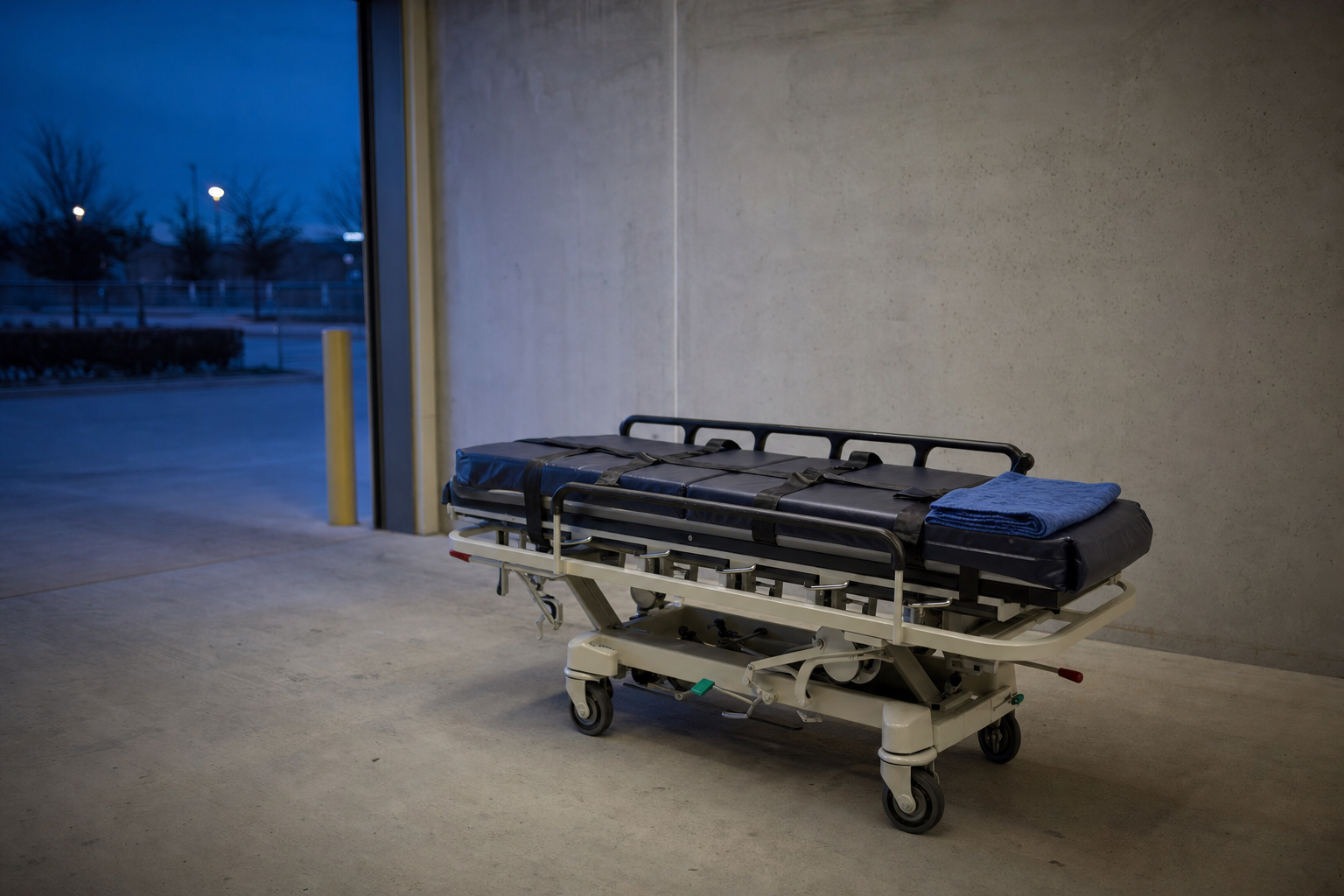

A 480-pound patient needs to leave the hospital by 2 PM. The discharge nurse calls a transport company at noon. The van shows up, the crew looks at the patient, and then quietly explains the stretcher is rated to 400 pounds. Now the family is on the phone at 1:30 PM trying to find a provider with the right equipment. This scene plays out constantly, and it is almost always avoidable with a few questions asked earlier.
The short answer for families and case managers
Bariatric medical transportation requires reinforced stretchers, wider wheelchairs, higher weight-capacity ramps, and crews trained in safe patient handling. Before booking, confirm the provider’s actual weight rating (not a marketing number), the width of their equipment, and how many crew members will be on the trip. H&M Transport offers dedicated bariatric transport across Virginia and the DC metro. Call (703) 304-7889 to confirm what a specific patient needs.
What makes bariatric medical transport different from standard NEMT
Standard non-emergency medical transport is built around equipment rated for average adult weights, typically 350 to 400 pounds. Bariatric transport starts where standard equipment stops. It is not the same service with a bigger label on the side.
Three things change:
- Equipment ratings. Bariatric stretchers, wheelchairs, and ramps are engineered for higher loads, often 500, 650, or 850 pounds depending on the piece. The frames, wheels, and locking mechanisms are heavier.
- Vehicle configuration. A bariatric-capable van has reinforced flooring, wider door openings, and lift or ramp systems rated for the combined weight of the patient plus equipment.
- Crew size. Standard NEMT often runs with one or two crew. Safe bariatric transfers frequently need two crew members at minimum, sometimes three, depending on the patient’s mobility and the layout of the pickup and drop-off locations.
Skip any of these and the risk is not just a delayed ride. It is a dropped transfer, an injured patient, or an injured crew member. The Americans with Disabilities Act sets baseline accessibility rules for transport, but bariatric readiness goes beyond ADA basics into equipment specification.
Equipment questions to ask any bariatric transport provider
Before you book, run through this list with the dispatcher. If they can’t answer directly, that is your answer.
- What is the actual weight capacity of the stretcher or wheelchair you’ll send? Ask for a number, not "we can handle it."
- How wide is the equipment? A 26-inch chair does not fit through a 24-inch doorway. Measure the tightest doorway at both ends of the trip.
- What is the ramp or lift rating? Combined weight of patient plus equipment plus any assisting crew member during transfer.
- How many crew members will be on the trip? For heavier patients or difficult access points, two is often the minimum.
- Is the vehicle floor reinforced for bariatric loads? Standard van floors are not.
- Are the safety straps rated for the patient’s size? Longer, wider straps exist for a reason.
- What is the plan for stairs, narrow hallways, or an outdoor path in bad weather? This is where trips go wrong most often.
- Can the crew do a lateral transfer from bed to stretcher, or does the patient need to assist? Some patients cannot bear weight at all.
- Do you offer stretcher and wheelchair options both, in bariatric ratings? Look at stretcher transport and wheelchair transport as separate service lines.
- What happens if the equipment on the vehicle turns out to be wrong once you arrive? A real answer, not a shrug.
How to communicate patient needs accurately when booking
The single most useful thing a family or case manager can do is share accurate numbers up front. Providers are not judging. They are trying to send the right van the first time.
When you call, have these ready:
| Detail | Why it matters |
|---|---|
| Patient’s current weight | Determines stretcher, chair, and ramp rating |
| Patient’s height and hip width | A 350-pound patient with wide hips may need a wider chair than a 425-pound patient |
| Weight-bearing ability | Can they stand briefly, pivot, or are they fully dependent? |
| Skin condition or wounds | Affects padding, positioning, and transfer technique |
| Medical devices | Oxygen, catheters, drains, dialysis access ports |
| Doorway widths at both ends | Home doorways are often the tightest point |
| Stairs, porch height, elevator access | Determines crew size and equipment path |
| Pickup and drop-off times | Fixed by clinic or hospital, not negotiable |
Providers who ask these questions on the intake call are the ones you want. Providers who don’t ask are guessing.
A note on language: use plain descriptions. "The patient is 5’6", 460 pounds, cannot bear weight, and has a front porch with three steps and no railing" is more useful than "she’s a big lady and it’s a tough house." Dispatchers translate that first sentence into an equipment plan in about 30 seconds.
What to expect on the day of transport
A well-planned bariatric trip is almost boring, which is the goal. Here is a typical sequence for a hospital-to-home transport.
The crew arrives at the pickup location and confirms the patient’s identity and current status with the nursing staff. They review the discharge paperwork for weight-bearing restrictions, oxygen needs, and any positioning requirements. Then they walk the path from the hospital room to the vehicle, looking for tight turns, elevator dimensions, and door thresholds.
Transfer happens next. For a fully dependent patient, this is usually a lateral slide from bed to stretcher using a transfer board, done by two or three crew. The patient is secured with straps sized to fit. Loading into the vehicle uses a ramp or hydraulic lift rated for the combined load. On the drive, the patient is monitored but not clinically treated. Bariatric transport is non-emergency and does not include IV management or medication administration.
At the home, the crew reverses the process. They walk the path first. They stage the equipment. They move the patient carefully into the home and, when needed, into a bed or chair. The whole visit at the home can take 20 to 40 minutes depending on access.
The main thing families notice: it is slower than a standard transport, and that is intentional. Rushing a bariatric transfer is how people get hurt.
How bariatric transport fits into hospital discharge and care transitions
Discharge planners at Inova, MedStar, Fauquier, and other DC-area hospitals coordinate bariatric transport regularly, but the timing gets tight. A patient cleared for discharge at 10 AM may not actually be ready to leave until noon, and the bariatric van has to be available and equipped at that specific window.
Two things help discharge go smoothly:
- Book early, even if the exact time is unclear. A reservation with a window is better than a same-day scramble. Call H&M at (703) 304-7889 to discuss timing flexibility for hospital discharge and confirm how the team handles scheduling windows.
- Plan a long-distance discharge in segments. For a patient going from a DC specialty hospital back to a rural Virginia home, confirm the crew is prepared for a multi-hour ride. Bariatric patients need repositioning on longer trips to prevent pressure injuries.
Insurance coverage varies. Some Medicaid plans include NEMT benefits for eligible patients. Medicare Part B generally does not cover routine non-emergency transport. Medicare Advantage plans sometimes include a transport benefit, but rules differ by plan. The CMS site has general information, and your plan’s member services line can confirm what applies. For specifics on coverage and your eligibility, contact H&M at (703) 304-7889 to discuss your plan.
Questions families most often forget to ask
After years of these calls, the same gaps come up:
- "Do you carry the equipment on this van, or do you have to dispatch a different one?" Some providers advertise bariatric service but only have one or two properly equipped vehicles across a large service area.
- "What is your no-show or cancellation policy if the hospital delays discharge?" Hospital discharge timing is unpredictable. You want a provider who understands that.
- "Can the crew help the patient use the bathroom before the trip?" For long trips, this is not a minor detail. Ask about the plan.
- "What if the patient becomes uncomfortable during the ride?" A driver who can safely pull over and reposition is not the same as a driver who keeps going because the schedule says so.
- "Is a family member allowed to ride along?" Policies vary. For bariatric transport, sometimes the answer depends on how much room is left in the vehicle after equipment.
- "What happens if we need to reschedule the whole thing?" Life changes. Providers who make rescheduling painful are providers you learn to avoid.
The through-line: the right questions are boring and specific. Vague reassurance from a dispatcher is a warning sign. Direct answers with numbers are what you want.
FAQ
What weight is considered bariatric for medical transport?
There is no single industry cutoff, but most providers designate bariatric equipment for patients over 350 to 400 pounds. Some vans handle 650 to 850 pounds with the right stretcher and ramp. Always ask the specific weight rating of the equipment being sent, not just whether the service is "bariatric-capable." The actual number is what matters.
Can bariatric transport handle a patient who cannot stand at all?
Yes. Fully dependent transfers are standard for bariatric NEMT. The crew uses a transfer board and a lateral slide from bed to stretcher, typically with two or three crew members. Share the patient’s weight-bearing status when booking so the right crew size is scheduled. This is a common request, not an unusual one.
How far in advance should we book bariatric transport?
For scheduled trips, 48 to 72 hours is comfortable. For hospital discharge, book as soon as discharge is being planned even if the exact time is not confirmed. Bariatric-equipped vehicles are a smaller share of any provider’s fleet, so availability is tighter than for standard NEMT. Same-day bookings are possible but not guaranteed.
Does insurance cover bariatric medical transport?
Coverage varies. Some Medicaid plans include NEMT benefits, some Medicare Advantage plans include a transport benefit, and private insurance policies differ widely. Medicare Part B generally does not cover routine non-emergency transport. Confirm with the specific plan’s member services line before assuming coverage. For information on how your plan may cover bariatric transport, contact H&M at (703) 304-7889.
What if we book bariatric transport and the equipment turns out to be wrong on arrival?
This is why the intake call matters. Providers who ask specific questions up front, weight, height, doorway widths, weight-bearing status, are much less likely to arrive with wrong equipment. If a mismatch does happen, a well-run provider will dispatch the correct vehicle rather than attempt an unsafe transfer. Ask about this scenario before you book.
To book bariatric medical transportation with H&M across Virginia and the DC metro, call (703) 304-7889 or reserve online. Have the patient’s weight, mobility status, and doorway details ready when you call, and the scheduler will match the right equipment to the trip. For an overview of all transport services, including stretcher, wheelchair, and long-distance options, review the service pages before you dial.